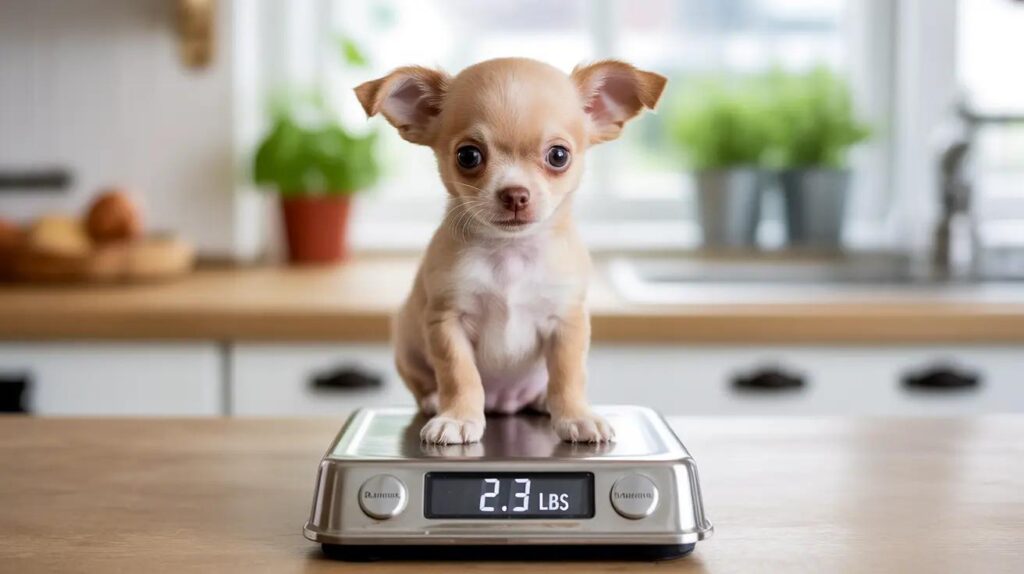
At thirteen weeks, your Chihuahua is still growing and developing. You may notice changes in its body proportions, energy levels, appetite, and behaviour.
However, not every Chihuahua puppy grows at the same speed. Comparing your puppy’s size with another puppy is not a reliable way to judge its health.
Make Weight Monitoring a Routine
Regular weighing can help you notice changes over time.
Use a suitable digital pet scale or ask your veterinarian to weigh your puppy during checkups. Record the date and weight so you can follow its individual growth pattern.
Try to weigh your puppy under similar conditions each time for more useful comparisons.
Observe More Than Weight
Healthy development involves several things, not just the number on a scale.
Pay attention to:
– Appetite and drinking habits. – Energy and interest in play. – Coat and skin condition. – Normal movement and coordination. – Comfortable eating and drinking. – General behaviour.
Your veterinarian can assess your puppy’s body condition and development.
Maintain Balanced Nutrition
Feed a complete and balanced puppy food suitable for small breeds. Follow appropriate portion guidance and ask your veterinarian whether adjustments are needed as your puppy grows.
Avoid giving excessive treats or using supplements without professional advice.
Know When to Seek Help
Contact your veterinarian if your puppy stops gaining as expected, loses weight, refuses food, becomes unusually tired, or develops vomiting or diarrhoea.
Small puppies can become unwell quickly, so unusual changes deserve attention.
Final Thought
Monitoring your Chihuahua’s growth helps you understand its individual development. Regular records, balanced nutrition, and veterinary checkups provide a much clearer picture than comparing its size with other dogs.